
Knowledge Base
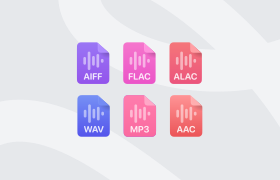
Best audio format 2026: how to choose for music, streaming, and recording
Confused about the best audio format? We break down MP3 vs FLAC vs WAV, lossless vs lossy, and which format to use for music, streaming, podcasts and recording.
Get the latest news from Documents in your inbox.
You can unsubscribe anytime. For more details, see our Privacy Notice.
Technical breakdowns, app showdowns, and optimization secrets.
Knowledge Base
Confused about the best audio format? We break down MP3 vs FLAC vs WAV, lossless vs lossy, and which format to use for music, streaming, podcasts and recording.

Knowledge Base
Ready to share your first YouTube Short? Learn how to upload Shorts from mobile or desktop, adjust the key settings, and publish your video in just a few steps.

Knowledge Base
Want to watch YouTube videos offline? Learn how to download videos on your phone, tablet, or computer and access your favorite content wherever you are.
Knowledge Base
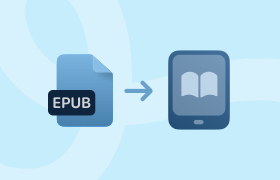
Learn how to send EPUB files to your Kindle using email, the Kindle app, Send to Kindle, or USB. Compare every method and troubleshoot common issues.
Knowledge Base
Compare PPT and PPTX file formats, learn their key differences, compatibility, file sizes, and discover which PowerPoint format is best for your presentations.

Knowledge Base
A practical guide to mobile file conversion: iPhone and Android workflows, the best file converter apps, offline options, supported formats, and safety tips for web converters.
Knowledge Base
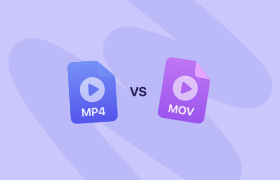
Still torn between MP4 and MOV? Learn the real quality, compression, compatibility, and editing differences so you can pick the right video format for iPhone, Mac, Windows, and the web.

Knowledge Base
Use Documents.io to convert and compress multiple documents at once in your browser or the Documents app. Learn how its batch tools handle PDFs, Office files, media and more.
Knowledge Base
The best e-reader for file-type flexibility depends on your library. Kindle supports Amazon’s AZW and PDF formats, while Kobo, PocketBook, and Onyx Boox handle open standards like EPUB, MOBI, and CBR. For the broadest compatibility, Kobo and PocketBook offer the greatest freedom.